Day 1 in Vienna felt like stepping into the center of global diplomacy and international cooperation.
Our day began with a visit to the United Nations Offices in Vienna, one of the four major UN headquarters in the world alongside New York, Geneva and Nairobi. Walking through the complex was a reminder of how interconnected global issues truly are, from security and crime to energy, development and international relations.
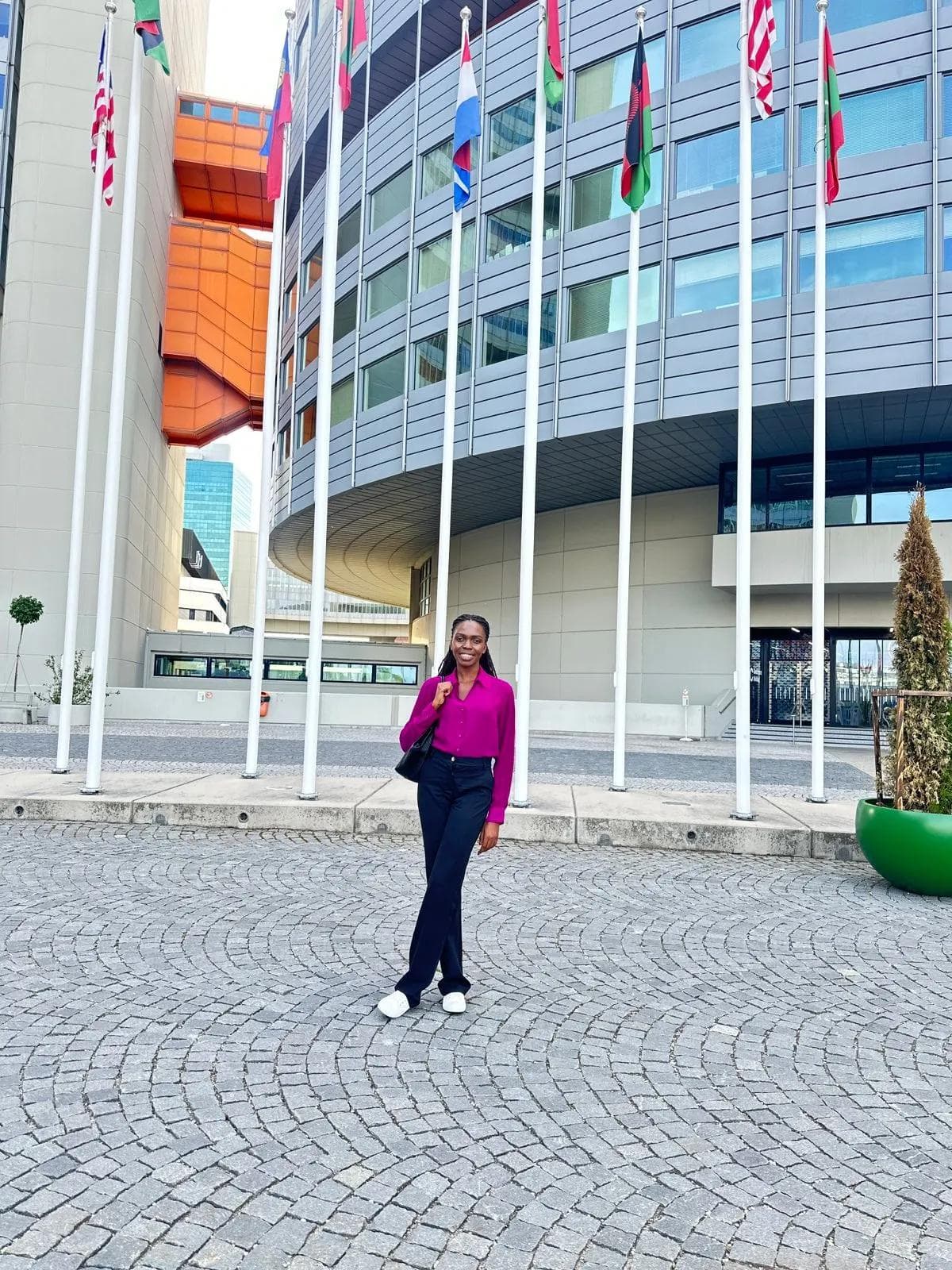
We got an introduction to how the United Nations system works, its member states and the role different agencies play in addressing global challenges. What stood out most was understanding just how much coordination happens behind the scenes between countries, institutions and policymakers in shaping international decisions that eventually affect ordinary citizens across the world.
One of the key sessions focused on the United Nations Office on Drugs and Crime (UNODC) and its work, particularly in Africa. We learnt how the organization works with governments and institutions to tackle issues such as organized crime, corruption, human trafficking, terrorism, cybercrime and drug-related challenges.
What made the conversation feel even more relatable was learning about the PLEAD programme in Kenya — the Partnership to Enhance and Advance Law Enforcement and Anti-Corruption Development. The programme supports cooperation between Kenyan law enforcement agencies and international partners in strengthening criminal investigations, fighting corruption and improving justice systems. It was interesting to see how global institutions like the UN are not just operating from a distance, but are actively involved in building local capacity and supporting governance systems back home.
We also explored the history and role of the International Atomic Energy Agency (IAEA), an institution many people primarily associate with nuclear weapons and global security. But the session revealed a much broader mandate. Beyond nuclear oversight and safety, the IAEA also supports countries in areas like cancer treatment, food security, agriculture, water management and scientific research through peaceful nuclear technology.
It was fascinating to learn how nuclear science is being used in practical and life-saving ways across developing countries, including parts of Africa. From improving cancer diagnosis and treatment to helping farmers deal with climate and food production challenges, the conversation shifted the perception of nuclear technology from something distant and political to something deeply connected to human development.
For me, Day 1 was not just about learning acronyms or understanding institutions. It was about realizing how global systems connect directly to local realities in countries like Kenya, whether through justice reforms, development programmes, healthcare support or international cooperation.
It was a powerful reminder that while international organizations may sometimes feel distant from everyday life, many of the policies, partnerships and programmes discussed in those rooms eventually shape the societies we live in.

Miriam Angil
Director
Founder and Director, Sajen Productions